

Cambodia 10.04.2025 Updated: Cameron Hagan
Here in the West, New Year might seem like a distant memory come spring time, but celebrations in Asia are just getting started. These festivities are immersive and joyous for locals and travellers alike - they offer the chance to experience places at their most vibrant, as well as learn more about culture and customs.
We'll be taking a look at new year across Asia, including Thailand, Uzbekistan, India and more. Some of these festivals have much in common, but each offers a distinct experience thanks to the unique landscapes, cultures and people. Celebrations usually take place in late March or early April, aligning with the solar calendar and coinciding with the sun's entry into the constellation Aries.
Songkran (Thailand)

The vibrant Songkran festival runs for three days each April, and is famous for its gigantic water fight. Interestingly, this festival and its traditions actually stem from Myanmar (Burma), whose new year festivities we'll look at next.
The use of water is both fun and spiritual. It's used to symbolically and literally cleanse everything from homes to people, washing away the old year and its problems in preparation for the new one. It also represents the cleansing of the spirit.
As part of Songkran, local people will wash Buddha statues, clean their homes and pour scented water over monks' hands - but it is the water fight that will act as the centre of travellers' experiences.
This tradition began as the act of gently tipping water over one another as means of symbolic cleansing and rejuvenation; over the years, this has morphed into a boisterous water fight that takes place across the country. Several destinations have particularly strong reputations for the calibre of their water fights, including Chiang Mai and Bangkok.
The best way to experience the water fight is to throw yourself into it - you'll soon see that visitors are often particular targets for buckets of water, water pistols and water bombs! So, go out prepared with your own stash of water-based weapons (which are readily available on most busy streets during the festival) and enjoy the friendly chaos. Our advice is to bring a waterproof phone case and wear clothes which you aren't worried about getting wet. Trust us - you will get soaked!
Navruz (Uzbekistan)
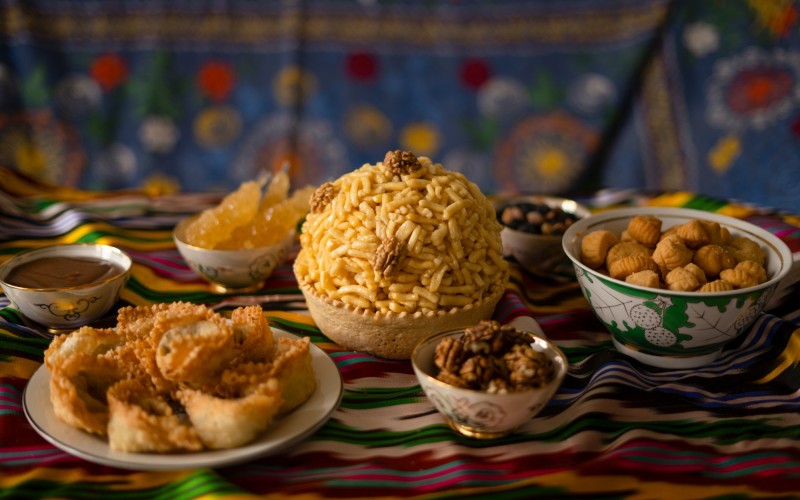
As winter retreats from the ancient cities and fertile valleys of Uzbekistan, the country bursts into celebration with Navruz, the traditional New Year festival marking the spring equinox around 21 March. Rooted in traditions stretching back more than 2,000 years, Navruz celebrates renewal, prosperity and the awakening of nature.
Across Samarkand, Bukhara, Tashkent and the Fergana Valley, streets and squares come alive with music, folk dancing, colourful costumes and the irresistible aromas of festive cooking. Families gather to prepare sumalak, a sweet, slow-cooked delicacy made from sprouted wheat that symbolises abundance and good fortune.
Travellers visiting during Navruz can join the festivities in public squares, sample traditional dishes, enjoy performances and experience the legendary warmth of Uzbek hospitality. In rural villages, the celebrations offer an especially intimate glimpse of local life, set against a delightful backdrop of flowering apricot and peach orchards.
Few occasions reveal the living spirit of the Silk Road quite so beautifully.
Chaul Chnam Thmay (Cambodia)

Spanning three days, the Cambodian New Year festival, called Chaul Chnam Thmay in the local language, begins on New Year's Day and shares a few similarities with Songkran and Thingyan, such as the use of water for symbolic cleansing. The chaotic water fight is just as prevalent here as in Thailand and Myanmar, especially in Siem Reap and the capital, Phnom Penh. People will be lined up in busy areas with baby powder and water guns, ready to cleanse and wish a happy new year to anyone and everyone who walks past.
Past the water throwing fun in the streets, this is an important few days in Cambodian Culture. On the first day of the festival, people light candles and burn incense at shrines, say prayers, and often wash with holy water. The second day is all about charity, with local people making an effort to help the poor and less fortunate in their area, as well as going to the local monastery to honour their ancestors. The third day is all about cleansing, with people cleaning their Buddha statues with perfumed water. This is also a time when people bathe their elders and receive advice for the future.
There are plenty of fun and games during Cambodian New Year - in fact, the playing of traditional games out in the street is one of the most common sights of the celebrations. You'll easily be able to spot families playing a variety of games, which often include dance.
Qingming – A Time of Remembrance and Renewal, China
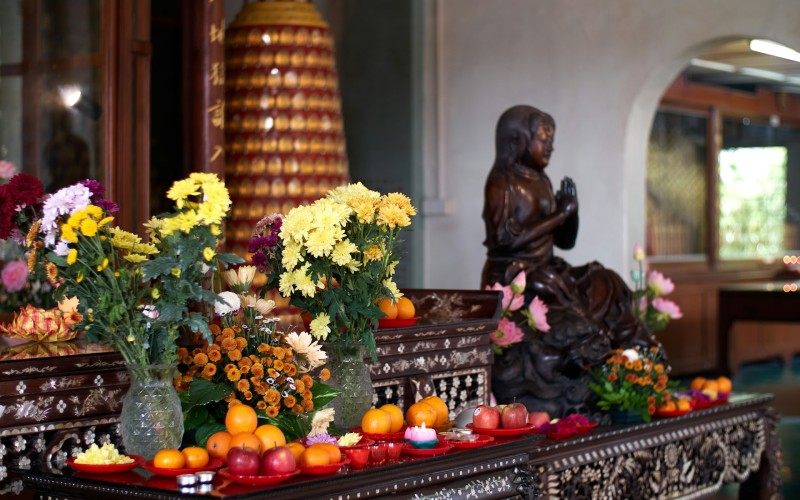
As spring breathes new life into China's gardens and countryside, families gather to observe Qingming, the ancient Festival of Pure Brightness. Celebrated in early April, it is a time to honour ancestors, welcome the warmer days and reflect upon the enduring bonds between generations.
Traditionally, families visit ancestral graves to sweep away fallen leaves, lay flowers and make offerings. Yet Qingming is also a celebration of nature's awakening. Parks and gardens fill with families enjoying spring picnics, leisurely walks beneath flowering trees and the age-old pleasure of flying colourful kites against clear spring skies.
For travellers, Qingming offers a fascinating glimpse into China's cultural heritage. While private ancestral ceremonies are best respectfully observed from a distance, visitors can embrace the season through spring outings, kite flying and exploring the beautiful gardens of Hangzhou, Suzhou and Beijing.
It is a quieter, more contemplative celebration of spring, rich in symbolism and timeless traditions.
Boun Pi Mai (Laos)
Water also plays a central role in Pi Mai celebrations, both in religious rituals and in joyous water fights. Similar to Cambodia, a significant tradition in this festival is pouring scented water over elders' hands to show respect and seek their blessings for health and prosperity. This ritual strengthens family bonds. Families also hold Baci ceremonies, where sacred threads are tied around wrists to bestow good luck and blessings.
While Pi Mai is celebrated nationwide, Luang Prabang offers the most elaborate festivities with extended celebrations lasting up to a week. Highlights include the procession of the Pha Bang Buddha statue and elephant parades.
Water Sprinkling Festival (China)
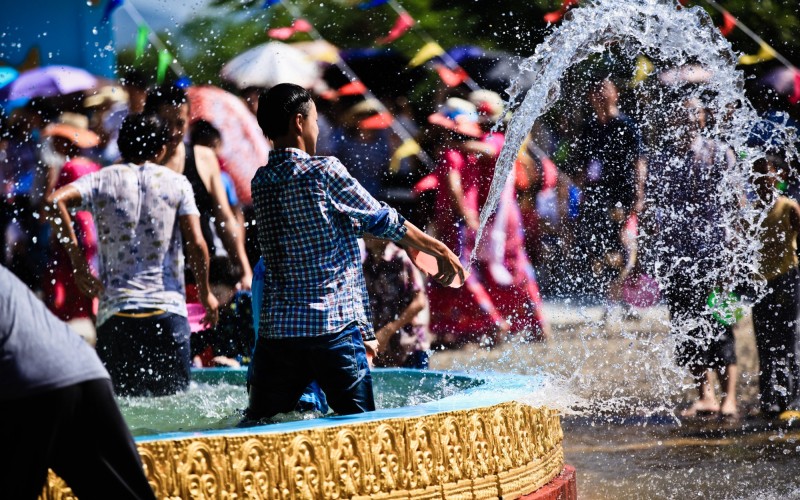
Within the Yunnan Province in China, Water Sprinkling Festival marks the New Year of the Dai ethnic minority and is one of their most important festivals, blending religious rituals with joyous festivities. Once again, water is used as an act of purification and blessing, as the festival kicks off by the Bathing the Buddha ritual and is followed by a water fight to bring good luck and wash away bad fortune. Monks chant scriptures, and people pray for prosperity, good weather, and happiness in the coming year.
What makes this festival unique are the activities along the banks of the Lancang River. Dragon boat races are held to bid farewell to the old year, night time floating lantern displays on the river are believed to drive away bad luck and attract good fortune, and artists create intricate sand sculptures near market areas, where visitors can enjoy local food, snacks, and shop for traditional Dai crafts and souvenirs.
Sinhala and Tamil New Year (Sri Lanka)
While symbolising renewal, prosperity, and the end of the harvest season akin to the above festivities, this celebration is steeped in astrological traditions, with specific times set for auspicious activities like cooking the first meal, lighting the hearth, and exchanging money. Families prepare traditional dishes such as Kiribath (milk rice), Konda Kavum (deep fried celebratory treats), and Mung Kavum (New Year sweets), which are shared with neighbors to foster goodwill. Rituals like the anointing of herbal oil and religious observances during the neutral period (Nonagathe) add spiritual depth to the festivities.
The New Year also brings community celebrations with traditional games like pillow fighting (Kotta Pora) and pot breaking (Kana Mutti), accompanied by drumming on the Rabana. Streets come alive with firecrackers, music, and colorful attire, creating a joyful atmosphere. This festival unites the diverse communities of Sri Lanka by blending Buddhist and Hindu traditions, emphasising family values, gratitude, and reconciliation. For visitors, it’s an ideal time to experience Sri Lanka’s rich heritage and cultural warmth firsthand.
Indian Solar New Year Celebrations

Different states observe unique traditions under various names in India, such as Baisakhi in Punjab, Poila Boishakh in Bengal, Puthandu in Tamil Nadu, Vishu in Kerala, and Bihu in Assam. Each celebration is deeply rooted in regional customs, blending religious rituals with joyous festivities.
For example, Baisakhi honors the harvest season and commemorates the formation of the Khalsa Panth for Sikhs - a community of initiated Sikhs founded by Guru Gobind Singh in 1699 - featuring prayers at gurdwaras and energetic folk dances. Meanwhile, Kerala’s Vishu highlights prosperity through rituals and a grand feast (Sadya). These celebrations embody themes of renewal, gratitude, and community bonding, offering visitors a glimpse into India’s multi-faceted cultural tapestry.
Holi, the festival of colours, is also celebrated in Spring. Find more details here: How to make the most of Holi in India.
Related Tours

Essential Thailand
12 days from £ 2790 per person

Myanmar Discovery
22 days from £ 5480 per person

Laos & Cambodia Explorer
14 days from £ 3450 per person

Laos and Angkor Wat
14 days from £ 4200 per person

Glorious Yunnan
14 days from £ 4900 per person

The Heart of Sri Lanka
9 days from £ 2145 per person

Kerala Family Holiday
12 days from £ 1095 per person