Odisha’s Indigenous Arts & Sacred Landscapes

From colonial Calcutta to the temples, tribes and sacred heartlands of Odisha.

OVER 35 YEARS EXPERIENCE AWARD WINNING LUXURY HOLIDAYS 100% FINANCIAL PROTECTION

new Tailor-Made Tour

  • Duration15 Days
  • Flights IncludedYes
  • Prices From £ 3650

tour enquiry

  Places Visited : Kolkata - Bawali - Baripada - Dalijoda - Puri - Konark - Chilika Lake - Bhubaneswar

Embark on a transformative 15-day odyssey that begins amidst the colonial grandeur of Kolkata and drifts slowly southwards into the sacred heartlands of Odisha. This is a voyage that moves from the imperial echoes of the Raj to the timeless rhythms of tribal India, where you will trade city streets for the quiet of artisan villages, watching masters of dokra and ikat ply ancient trades in the shadow of forested hills.

Your path winds through a landscape steeped in devotion, from the sun-drenched ruins of Konark and the spiritual fervor of Puri’s Jagannath Temple, to the silent majesty of Buddhist monasteries and the shimmering waters of Chilika Lake, home to Irrawaddy dolphins and vast flocks of migratory birds. Staying in restored palaces and heritage retreats, you will experience the soul of eastern India not just as a destination, but as a living tapestry of faith, art, and nature.

Remember, this trip can be personalised to suit your travel needs - we can tailor everything from hotel, travel type, duration and more.


Suggested itinerary

Day 1
UK - Kolkata

Depart the UK on your overnight flight to India.

Day 2
Kolkata

Arrive in Kolkata via Delhi and transfer to your hotel. The remainder of the day is at leisure to rest after your journey or enjoy a gentle introduction to the city.

Accommodation Options

Day 3
Colonial Kolkata & The Hooghly

Begin your exploration of Kolkata early morning, as it comes to life. A guided introduction drive passes the monumental civic buildings of the former imperial capital, including Writers’ Building, Raj Bhavan, Calcutta High Court and the General Post Office, before pausing at sites associated with the early colonial period. Later visit St John’s Church and grounds end the morning at the iconic Victoria Memorial.

Lunch is arranged at the elegant Glenburn Penthouse overlooking the Maidan and Hooghly River, before returning to your hotel for some rest. Early evening enjoy a boat cruise on the Hooghly, observing daily life and evening rituals unfold along the riverbanks.

Conceived as both a homage to Queen Victoria and a symbolic heart of Britain’s Indian Empire, iconic Victoria Memorial, Kolkata was completed in 1921. Designed by Sir William Emerson, its architecture blends classical European symmetry with Mughal-inspired domes and details, reflecting the hybrid aesthetics of the Raj. Constructed from white Makrana marble, the memorial houses galleries that trace colonial Kolkata’s political, cultural and social life through paintings, manuscripts and artefacts. Set within formal gardens, it remains the city’s most recognisable landmark and a powerful lens through which to reflect on the complexities, contradictions and legacies of empire in eastern India.

Accommodation Options

Day 4
Markets, Literature & Living Traditions

This morning you start the day at Kolkata’s flower market beside the Hooghly, followed by a short tram journey through the narrow lanes of Old Kolkata. Disembarking near Calcutta University enjoy a walk through College Street, long associated with the city’s intellectual life, before browsing the fascinating new and second-hand book stalls. We end at the historic Indian Coffee House for one of the most atmospheric coffee-breaks you are likely to experience in India.

The morning continues with a short walk to the Kumartuli, the traditional potters’ quarter, where clay deities are crafted for festivals. After lunch, visit Mother Teresa’s Missionaries of Charity and Shishu Bhawan, then return to the hotel via the Maidan, Kolkata’s great urban green.

Mother Teresa founded the Missionaries of Charity in Kolkata in 1950 with a simple mission: to serve the poorest of the poor with dignity and compassion. What began as a small local initiative grew into a global humanitarian movement operating in over 130 countries. Shishu Bhawan, the children’s home, offers refuge to abandoned and orphaned infants, reflecting her belief that care must be practical, personal and unconditional. Rooted in humility rather than ideology, her work transformed Kolkata into a focal point of global conscience and remains a living presence in the city today. You may wish to volunteer a little of your spare time, perhaps mingling with the children or teaching for an hour or so. 

Accommodation Options

Day 5
Kolkata – Bawali: Zamindar Bengal

Leave the city behind and travel into rural Bengal to Bawali (35 km | drive 1.5 hours). Explore the estate and surrounding village, gaining insight into zamindari life, temple traditions and the rhythms of village society shaped by land and water.

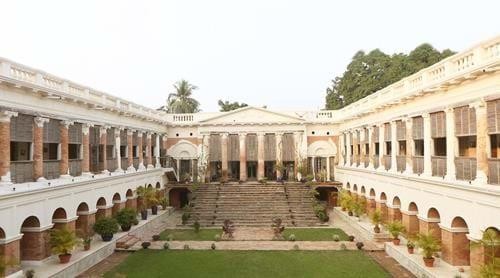
The Bawali Rajbari dates from the late 18th century, when powerful zamindars governed vast agricultural estates on behalf of the Mughal and later British administrations. The house once stood at the centre of economic, social and ceremonial life, overseeing temples, ponds and villages. After decades of abandonment following Independence, the property was meticulously restored using traditional techniques, lime plaster and local craftsmanship. Its revival not only preserved a rare example of rural Bengali aristocratic architecture but also reconnected the estate with village life, providing employment and renewing cultural continuity.

Meals: Breakfast, Lunch, Dinner

Accommodation Options

Day 6
Bawali - Baripada (Odisha)

Travel south into Odisha, arriving in Baripada (260 km | drive 6–7 hours). This afternoon, explore the atmospheric ruins of Haripurgarh Fort, set amid forested hills near the town.

Haripurgarh Fort, near Baripada in Mayurbhanj, Odisha, is a captivating destination for history and culture lovers. Once the 14th-century capital of the Bhanja dynasty, this sprawling 25-acre ruin showcases remnants of fort walls, gateways and intricately carved temples like the rare Rasika Raya brick temple, a unique example of early brick temple architecture in eastern India. Visitors can wander among the evocative ruins and imagine the fort’s glorious past, with its temples, palace foundations, underground chambers and riverside setting offering a serene yet evocative heritage experience. It’s ideal for heritage photography, leisurely exploration and insights into Odisha’s royal legacy.

Meals: Breakfast, Lunch, Dinner

Accommodation Options

Day 7
Baripada - Birdlife & Craft Traditions

Begin with an early guided walk in the palace grounds, rich in resident birdlife. Later, visit nearby villages to observe Sabai grass craft and the practice of dokra metal casting, still produced using ancient techniques.

Tribal crafts and culture of Mayurbhanj

Mayurbhanj district is one of Odisha’s most culturally diverse regions, home to indigenous communities such as the Santhal and Ho, who sustain distinct languages, social systems and artistic traditions. Forest-based livelihoods and agriculture shape daily life, while music and dance lie at the heart of communal expression. Festivals such as Baha Parab, Sohrai/Bandna and the springtime Chaitra Parva celebrate land, ancestry and renewal. From these ritual traditions emerged Mayurbhanj Chhau, a powerful masked dance blending tribal martial movements with epic storytelling. Wall murals, Sabai-grass weaving and pottery flourish, notably at Guhaldihi art and craft village near Baripada, preserving a living cultural heritage.

Dokra metal casting

Dokra is one of the world’s oldest known metal casting traditions, dating back over 4,000 years to the Indus Valley period. Using the lost-wax technique, artisans create clay moulds that are destroyed during casting, ensuring each piece is entirely unique. Traditionally practised by tribal communities, dokra objects range from ritual figurines to utilitarian items, often depicting animals, deities and scenes of daily life. The craft embodies a worldview in which art, belief and function are inseparable, preserving ancient knowledge systems passed down through generations of artisan families.

Accommodation Options

Day 8
Baripada - Dalijoda

Drive south to Dalijoda (150 km | drive 4 hours) and settle into a former royal hunting lodge. In the afternoon, enjoy a guided cycle ride through surrounding villages, offering a slow and intimate view of rural Odisha. Dinner is shared with your hosts.

Forest homelands of the Juang, Dalijoda

Dali Joda lies within a mosaic of forest, farmland and village settlements traditionally inhabited by Juang and Ho communities, whose lives revolve around subsistence agriculture and gathering forest produce. Renowned for finely woven baskets, intricately carved wooden combs and utilitarian bamboo the crafts of the Juang artisans reflect a deep knowledge of local materials. Sacred groves and nature-based rituals remain integral to cultural life, connecting people with seasonal cycles. Forests here host diverse wildlife and birdlife, and village festivals celebrate community bonds and ancestral spirits, offering travellers a rare glimpse into Odisha’s quieter, artisanal heartlands.

Stay: Kila Dalijoda

Day 9
Dalijoda: Buddhist Odisha

Today’s round trip into nearby Lalitgiri, Ratnagiri and Udaygiri explores Buddhist sites of the region including stunning monasteries, stupas and small museums, revealing Odisha’s significance as a centre of Buddhist learning and pilgrimage.

Odhisa’s Buddhist Heart

Set amid the low hills of coastal Odisha, Lalitgiri, Ratnagiri and Udayagiri together formed a powerful Buddhist monastic complex between the 5th and 13th centuries, central to the spread of Mahayana and later Vajrayana Buddhism. Ratnagiri, the most elaborate of the three, reveals vast monasteries, finely carved stone panels and thousands of votive stupas left by pilgrims. Lalitgiri’s great stupa hints at relic worship and early Buddhist foundations, while Udayagiri’s stepped monasteries suggest a thriving scholastic community. Small site museums preserve serene Buddhas and ritual objects, offering a compelling, accessible insight into Odisha’s Buddhist past.

Stay: Kila Dalijoda

Day 10
Dalijoda - Puri

Today you head for the coastal town of Puri, visiting the circular Chausath Yogini Temple at Hirapur and the heritage crafts village of Raghurajpur enroute (180 km | drive time: 5 hours).  On arrival in Puri, visit the fascinating Jagannath Temple in the evening.

Jagannath Temple, Puri

Rising above the pilgrimage town of Puri on India’s eastern seaboard, the Jagannath Temple is one of the subcontinent’s most powerful living religious centres. Dedicated to Lord Jagannath, it anchors a ritual tradition that has continued almost uninterrupted for centuries. Its significance lies as much in what can be observed as what is believed: vast daily food offerings prepared in temple kitchens, tightly choreographed ceremonies, and the extraordinary Rath Yatra, when vast throngs of people help carry the colossal chariot with effigies of Lord Jaganath and his siblings through the streets, offering a rare window into the inseparable intertwining of faith, community and urban life in India.

Pattachitra painting

Pattachitra is a highly disciplined traditional painting style originating in Odisha, closely associated with the cult of Lord Jagannath. Painted on treated cloth using natural mineral and vegetable pigments, the art follows strict iconographic conventions passed down through family lineages. Themes are drawn from Hindu epics, temple mythology and ritual narratives. Every stage - from preparing the canvas to grinding pigments - is carried out by hand. Far from being a static folk art, pattachitra remains a living tradition, sustaining cultural identity and artistic continuity in villages such as Raghurajpur.

Meals: Breakfast, Dinner

Accommodation Options

Day 11
Puri - Konark

A relaxed morning in Puri before visiting the Sun Temple at Konark. Option to stay for the sound-and-light show before returning to Puri. Distance: ~35 km each way | Drive: approx. 1 hour each way

Konark Sun Temple

The Sun Temple at Konark, built in the 13th century by King Narasimhadeva I of the Eastern Ganga dynasty, represents the apogee of Odisha’s temple architecture. Conceived as Surya’s celestial chariot, it is adorned with monumental stone wheels, horses and intricate sculptural panels depicting courtly life, celestial beings and everyday scenes. Beyond its aesthetic brilliance, the temple reflects advanced knowledge of astronomy, geometry and sacred cosmology. Now a UNESCO World Heritage Site, Konark stands as a powerful testament to artistic ambition and spiritual symbolism.

Accommodation Options

Day 12
Puri - Chilika Lake

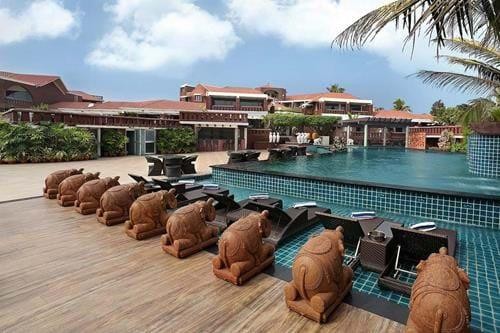
Today you transfer to Chilika Lake (50 km | drive 1.5 hours) and cruise by private boat through islands and fishing villages. Later you continue onto Rambha Palace, set directly on the lagoon’s edge.

Aquatic & amphibious life of Chilika Lake

Chilika Lake is Asia’s largest brackish lagoon, where freshwater rivers meet the Bay of Bengal, creating a uniquely dynamic aquatic ecosystem. Its shifting salinity supports a rich diversity of fish, crustaceans and aquatic reptiles, forming the basis of traditional fishing livelihoods. The lagoon is also home to endangered Irrawaddy dolphins, whose surfacing arcs are among Chilika’s most memorable sights. Mangrove fringes and shallow wetlands provide breeding grounds for amphibious species, making Chilika a vital ecological buffer between land and sea.

Stay: Rambha Palace

Day 13
Chilika Lake

Spend the day at leisure: boating on the lake, birdwatching, visiting nearby temples or relaxing at the palace spa and pool.

Birdlife of Chilika Lake

Each winter, Chilika Lake becomes one of Asia’s great avian spectacles, hosting over a million migratory birds arriving from Central Asia, Siberia and the Himalayas. Flamingos, pelicans, spoonbills, storks and numerous raptors congregate across its islands and marshes, particularly around the Nalabana Bird Sanctuary. The lake’s shallow waters offer abundant feeding grounds, while its isolation provides safe roosting sites. For centuries, this seasonal migration has shaped local rhythms, reinforcing Chilika’s reputation as one of the subcontinent’s most important bird habitats.

Stay: Rambha Palace

Day 14
Chilika – Bhubaneswar

Today we head to the capital city of Odisha, visiting the Udayagiri and Khandagiri caves enroute. Carved for Jain monks over 2,000 years ago. Continue to Bhubaneswar, exploring some of the city’s surviving stone temples. Distance: ~120 km | Drive: approx. 3 hours

Udayagiri and Khandagiri caves: The dawn of Indian architecture

Carved into twin hills on the edge of Bhubaneswar, the Udayagiri and Khandagiri caves are among India’s earliest rock-cut monuments, dating to the 1st century BCE. Hewn for Jain ascetics under King Kharavela, these simple yet eloquent caves combine austere cells with sculpted façades, inscriptions and reliefs that animate stone with story. The most celebrated, Rani Gumpha (Queen’s Cave), unfolds across two storeys with lively carvings of processions, musicians and courtly scenes, while Hathi Gumpha bears a vital inscription recording Kharavela’s reign. Together, the caves reveal an early fusion of spirituality, patronage and artistic expression at the dawn of Indian architecture.

Bhubneshwar: The Soaring legacy of the Kalinga Rulers

Under the Kalinga rulers, whose influence extended across much of eastern India from the early centuries BCE to the 12th century, Bhubaneswar rose as a city of stone spires and sacred geometry. More than a political centre, it became a vast ritual landscape where kingship, devotion and architecture converged. Successive dynasties commissioned soaring rekha deula temples, ritual tanks and subsidiary shrines dedicated primarily to Shiva, their vertical forms asserting both cosmic order and royal legitimacy. Seen together, the surviving temples—clustered densely across the old city—reveal an ambitious urban vision that transformed Bhubaneswar into one of India’s most remarkable sacred cityscapes, enduringly known as the “City of Temples.”

Accommodation Options

Day 15
Bhubaneswar – Departure

Transfer to the airport (20–30 minutes) for your return journey home via Delhi.

What's Included

✓   International flights from London
✓   13 nights accommodation
✓   All internal transportation and transfers
✓   English-speaking guides
✓   Breakfast daily
✓   Entrance fees to sites and monuments listed in tour itinerary

flight

International flights from UK

apartment

Accommodations Included

Private English-speaking guides

Private English-speaking guides

fork_spoon

Breakfast daily

commute

All road travel and transfers using private, chauffeur-driven vehicles

currency_exchange

Entrance fees to sites and monuments listed in tour itinerary

Places and Experiences in this tour

Similar Tours

Temples and Tribes of Odisha

Tailor Made Tours

  • Duration: 15Days
  • Prices from :£3660
  • Flight :Included

Places Covered:

  • Kolkata, Bhubaneshwar, Puri, Chilika Lake, Rayagada, Jeypore, Hyderabad
view details

What our clients say on Trustpilot

Plan your Next Adventure

Now is the time to begin planning your next adventures in Asia. Our Travel Specialists are ready to take your call and discuss the perfect getaway you have been dreaming of.

Make An Enquiry

0208 566 3739

Join our mailing list

For the latest TransIndus news, upcoming events, exclusive discounts, travel inspiration & more!


Submitting form...

Order TransIndus Brochures 2026/27