
26.10.2026 Updated: Hari Daggubaty
Returning to Uzbekistan with his wife Shilpa, who was visiting for the first time, TransIndus Sales Director Hari Daggubati rediscovered familiar Silk Road cities, ventured further afield and reflected on how much the country has changed since his earlier visits.
Returning to a country I know and love
I've travelled to Uzbekistan several times over the years, but this latest visit was rather special. My wife Shilpa was accompanying me, and as it was her first time in the country, I was looking forward to introducing her to some of the places I've come to know and enjoy.
There's something particularly rewarding about returning to a country with someone who is seeing it for the first time. Familiar sights take on a different quality when you're experiencing them together, and you find yourself paying attention to details you might otherwise overlook.
I was also curious to see how much had changed since my earlier visits. We wanted to revisit the great Silk Road cities of Samarkand, Bukhara and Khiva, but also explore some places I hadn't yet managed to reach, including the ancient fortresses of Khorezm, the Aral Sea and the Fergana Valley.
It turned out to be a journey that offered plenty of new discoveries alongside the pleasure of returning to somewhere familiar.
The familiar pleasures of Samarkand, Bukhara and Khiva
No matter how often I visit Uzbekistan, its great historic cities never fail to impress. I particularly enjoyed showing Shilpa around places that have stayed with me over the years.
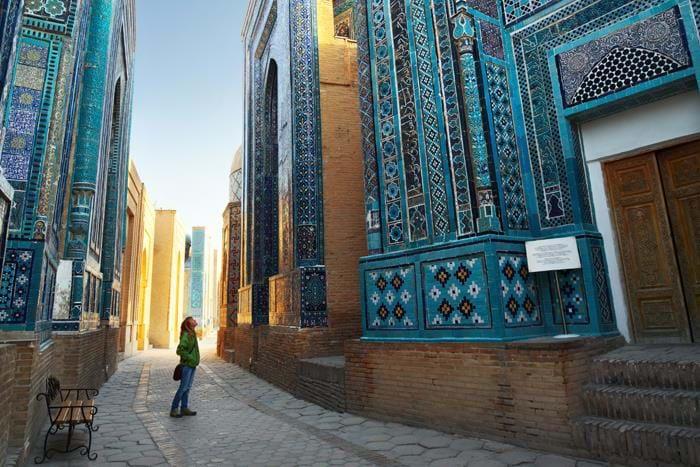
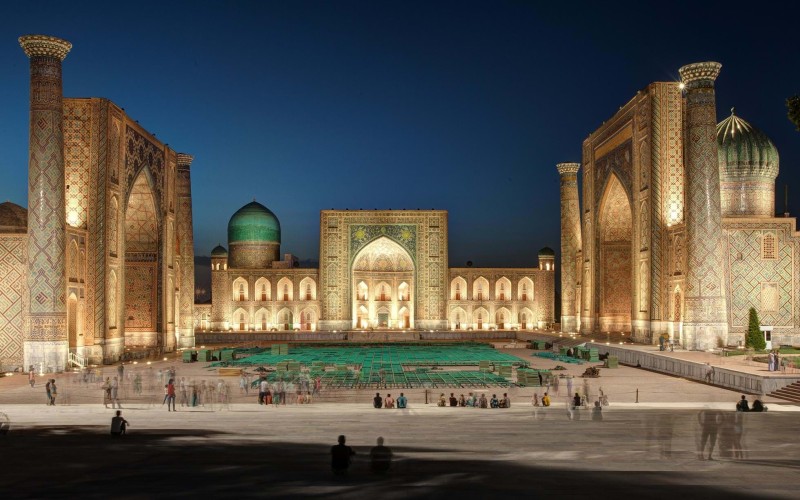
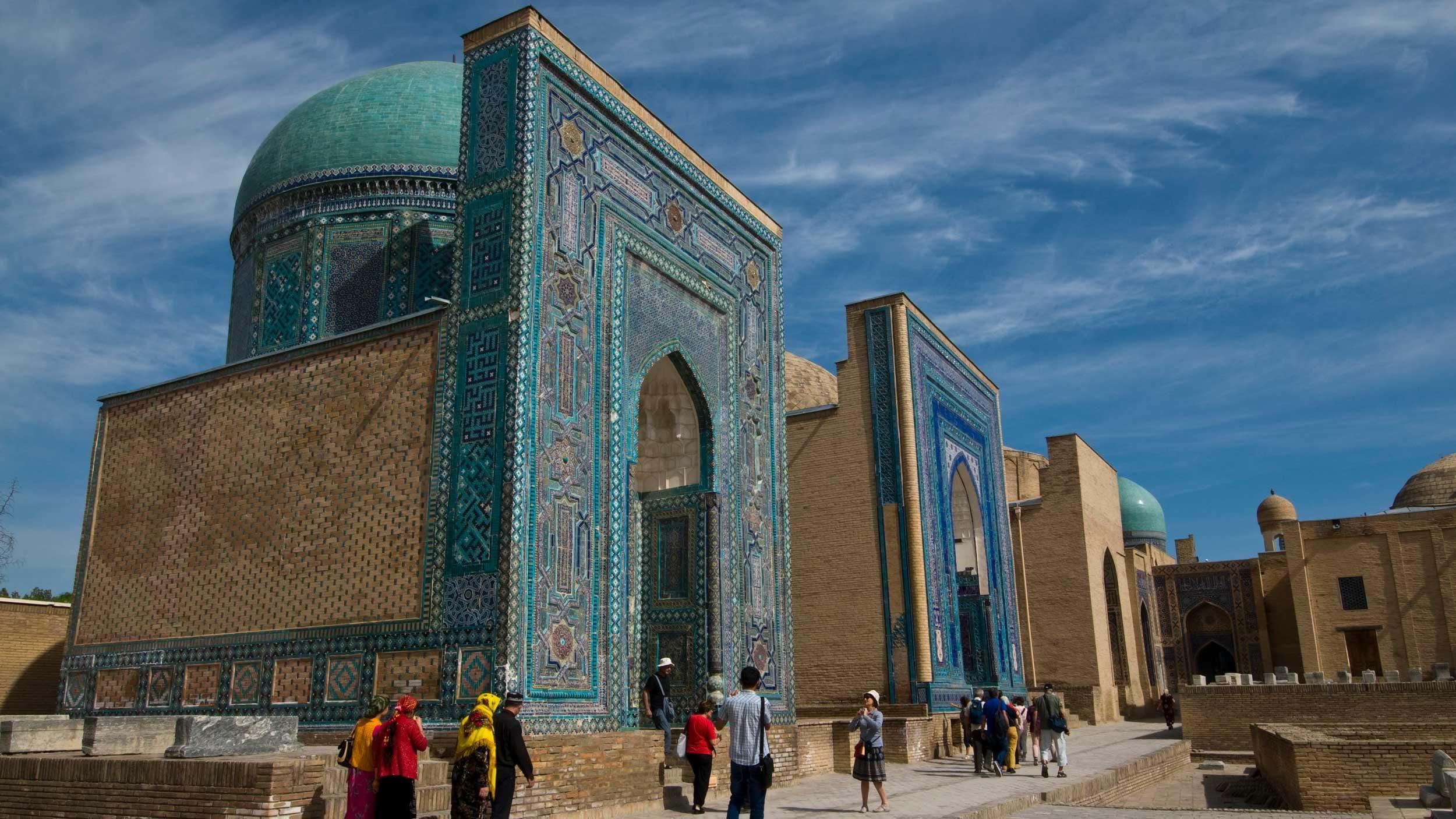
Samarkand is perhaps the most spectacular. Once the imperial capital of Timur, its monumental madrasas, soaring portals and turquoise domes are a remarkable expression of the city's former power and prosperity. Standing together in Registan Square, surrounded by those magnificent buildings, it's difficult not to appreciate the ambition behind them.
Bukhara has always been another favourite of mine. Its appeal is rather different, with an intimate old town of mosques, caravanserais, covered bazaars and narrow streets. There's so much to discover beyond the principal monuments, from little art galleries and craft shops to traditional musical instrument studios. It's a city where I could happily spend hours wandering without any particular destination in mind.
Then there's Khiva, enclosed within its great mud-brick walls. Its remarkably preserved inner city, Itchan Kala, is an extraordinary collection of minarets, palaces, courtyards and winding lanes. Walking through its gates really does feel like stepping into another age.
One of the pleasures of revisiting these cities is having the time to appreciate them without feeling the need to see everything. We explored the great squares in the early morning, before the crowds arrived, and returned towards sunset when the light catches the intricate tilework. Registan is particularly beautiful at dusk, while its illuminations after dark make it worth returning after dinner.
Over the years, I've come to appreciate that some of the nicest moments in Uzbekistan don't involve visiting another monument. Sometimes it's simply a matter of sitting in a historic square and watching everyday life unfold around you.
A country that has become easier to explore

One of the most noticeable differences since my earlier visits is how much more comfortable travelling around Uzbekistan has become.
In the past, journeys between the historic cities could involve lengthy road transfers and fairly basic accommodation. Today, the Afrosiyob high-speed trains connect Tashkent, Samarkand and Bukhara, making travel between these principal destinations considerably more straightforward. The trains are comfortable and efficient, and I particularly appreciate being able to enjoy the scenery without the fatigue of another long road journey.
Road conditions have improved in parts of the country, too, and there is now greater availability of higher-grade vehicles for those longer journeys into the countryside.
Accommodation has developed considerably. There is a wider selection of boutique hotels, while some older properties have been carefully restored and converted into characterful places to stay. One that particularly caught our eye was Kosh Havuz, a historic boutique hotel in Samarkand's old city.
I've always preferred hotels with a sense of place, and properties like this add considerably to the enjoyment of a journey.
Uzbekistan may not offer luxury in quite the same way as some other Asian destinations, but it's now possible to explore its cultural heritage with a level of comfort and convenience that would have been much harder to find on my earlier visits.
Discovering somewhere new
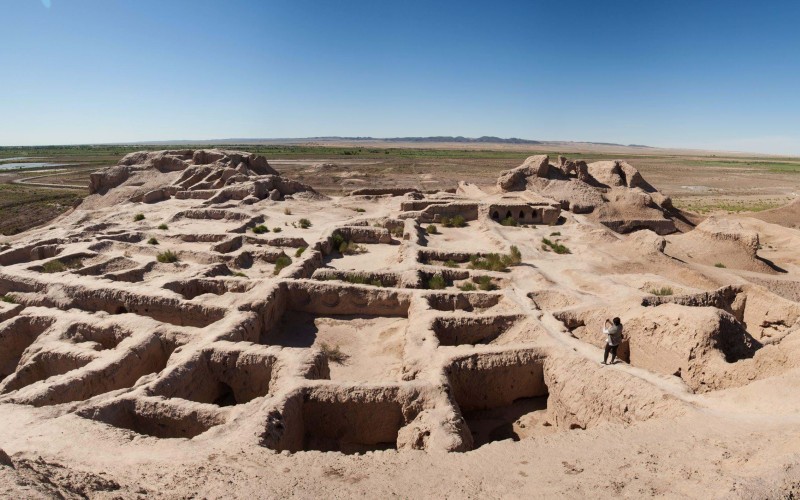
Although I've visited Uzbekistan several times, there were still places I hadn't explored. This journey gave us the opportunity to venture beyond the familiar cities and discover some of them together.
We travelled into the Khorezm desert to see the ancient fortresses of Toprak Kala and Ayaz Kala. Rising from the vast, open landscape, these impressive mud-brick ruins date from a much earlier period than the celebrated monuments of Samarkand and Bukhara. They offer a fascinating glimpse into the civilisations that flourished here long before the medieval Silk Road reached its height.
Another highlight was visiting the Aral Sea, somewhere I'd wanted to see for some time. Its dramatic retreat has left behind a haunting landscape and a stark reminder of the environmental consequences of the Soviet-era diversion of the rivers that once fed it. It's a sobering experience, and not somewhere I'd recommend adding casually to a first visit, given the considerable distances involved. Nevertheless, for anyone interested in the wider history and geography of Central Asia, it provides a very different perspective on the country.
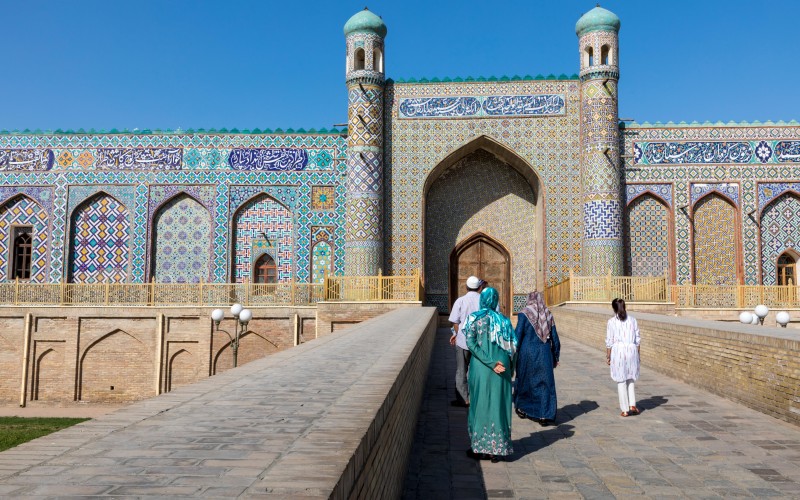
We also spent time exploring the palace at Kokand, in the Fergana Valley, a region with a fascinating history of trade, craftsmanship and cultural exchange.
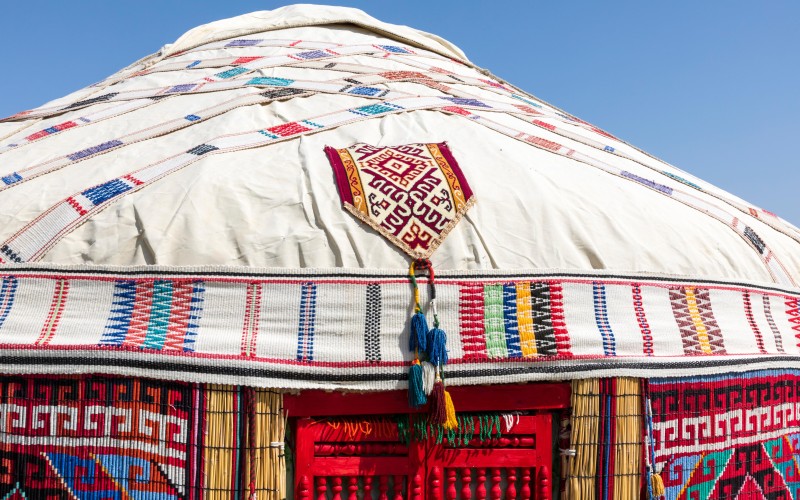
Elsewhere, the immense expanses of the Kyzylkum Desert offer a welcome change of scenery after days spent among intricately decorated mosques and madrasas. A stay in a traditional yurt camp near Aydar Lake is another possibility for those who enjoy a little adventure and don't mind trading some hotel comforts for a more rustic experience.
It was particularly satisfying to discover places that were new to both of us. Uzbekistan has far more to offer than its famous Silk Road cities, and I suspect there are still plenty of corners waiting to be uncovered on my next visit.
The warmth of Uzbek hospitality
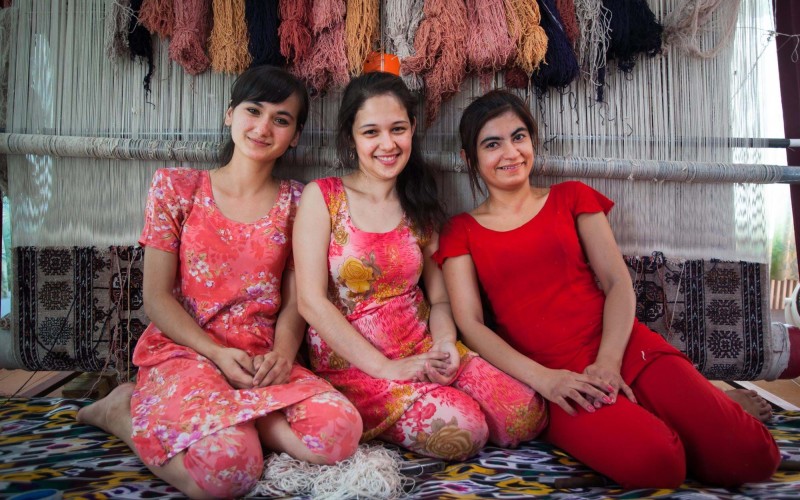
One thing I've noticed over successive visits is that opportunities to interact with local people have become more accessible. English is now understood a little more widely than it once was, particularly among younger Uzbeks, and there are increasing opportunities to visit family homes, join cooking sessions and spend time with local craftspeople.
Language can still be a barrier, but I've never found that much of an obstacle to a friendly exchange. A smile, a few gestures and a little patience usually work wonders, particularly when people are keen to share something they're proud of.
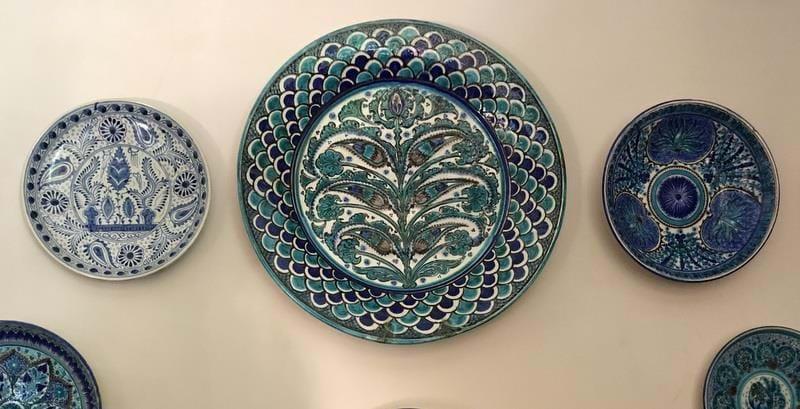
Uzbekistan has a rich tradition of craftsmanship, from pottery and silk weaving to embroidery and textiles. Many techniques have been passed down through generations, and taking the time to visit a workshop or browse a local market can be just as rewarding as visiting another historic monument.
I've also always appreciated the hospitality of everyday Uzbekistan. The tea and coffee shops, in particular, are pleasant places to pause during a day's exploring. They're generally comfortable and relaxed, offering the chance to sit for a while, exchange a few words with fellow travellers or strike up a conversation with local people.
It's these uncomplicated moments, and the genuine warmth of the service, that often stay with me long after a journey has ended.
Food, hospitality and the pleasure of sharing a meal

I should be honest about one aspect of travelling in Uzbekistan: the food isn't necessarily the country's greatest attraction.
Meals are plentiful and portions are generous, but the cuisine is largely meat-based, with dishes such as plov, the much-loved combination of rice, meat and carrots, and shashlik, skewers of grilled meat, featuring regularly. Over a longer journey, the choice can become somewhat repetitive, and although there are variations from place to place, the regional differences aren't always particularly pronounced to visitors.
That said, freshly baked bread is a pleasure, and food is an important part of the country's generous culture of hospitality. Being welcomed to a table and encouraged to share a meal is often more memorable than the food itself.
For me, this is part of what makes travelling in Uzbekistan enjoyable. It's not simply about what you see or eat, but the people you meet and the warmth with which you're received.
Why I'll be returning to Uzbekistan
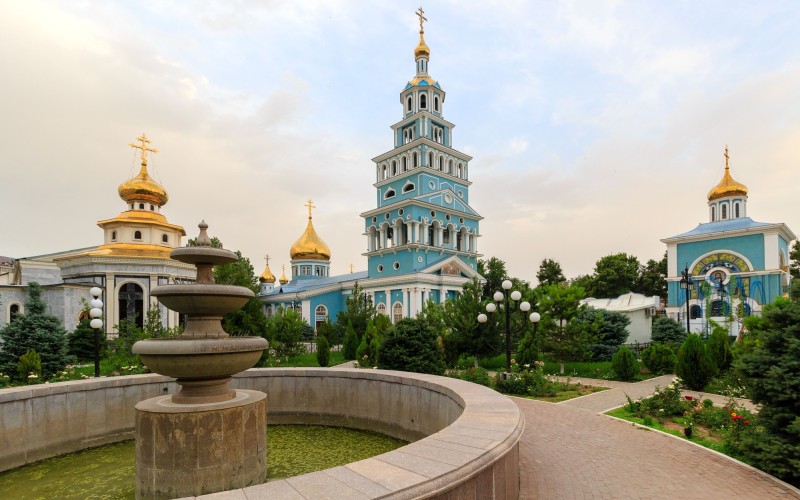
Travelling with Shilpa gave me a fresh appreciation of a country I thought I knew rather well.
For her, everything was new: the great Silk Road cities, the colourful bazaars, the desert landscapes and the traditions that remain such an important part of everyday life. For me, there was the pleasure of returning to familiar places, seeing how much had changed and finally exploring some of the corners I'd missed on previous journeys.
The improvements in transport and accommodation have certainly made Uzbekistan a more comfortable country to visit. But the things that first drew me here remain unchanged: its magnificent architecture, extraordinary layers of history, warmth of the people and unmistakable sense of being somewhere that once stood at the crossroads of the world.
I'm pleased to have been able to share a country I know so well with Shilpa, while discovering a little more of it myself. And I suspect I'll be returning again. There are still places I haven't seen, and I'm rather pleased about that.
Discover Uzbekistan with TransIndus
Explore our small group tours of Uzbekistan or tailor-made Uzbekistan holidays. Our Asia specialists will be delighted to help you plan a journey combining the country's remarkable history and culture with comfortable accommodation, knowledgeable local guides and time to enjoy the unexpected.
Related Tours
Uzbekistan: A Journey of Discovery
11 days from £ 1995 per person

Uzbekistan by High-Speed Rail
8 days from £ 2850 per person
Great Cities of the Silk Road
12 days from £ 3225 per person