
20.11.2026 Updated: Amrit Singh
The following Jeju experiences are written by TransIndus MD Amrit Singh, after her November 2026 travels to the island, as she discovered the island's traditions, local flavours and lesser-known attractions.
After several visits to Jeju Island, I've come to appreciate that its appeal extends well beyond its volcanic landscapes, waterfalls and coastal scenery. The island has a distinct cultural identity, shaped by its geography, history and the resourcefulness of the people who have made their lives here.
Some of my favourite experiences have been relatively simple: tasting carefully prepared tea in the foothills of Mount Hallasan, spending an evening among the food stalls of Dongmun Market, learning about the women who have made their living from the sea, or sitting down to a traditional meal of grilled black pork.
These are six experiences that offer a closer look at Jeju and the traditions that make it different from mainland South Korea.
A Taste of Jeju: Discovering Korean Tea Culture
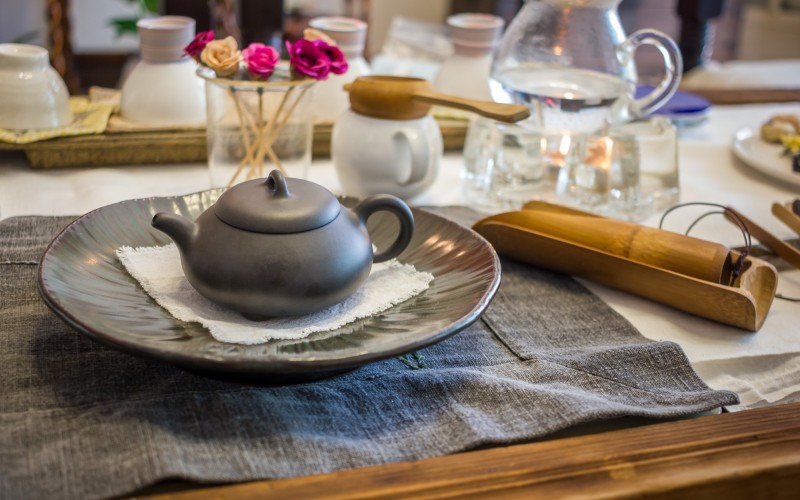
Having grown up with both South Asian chai and British tea traditions, I've always taken an interest in how different cultures approach this familiar drink. My introduction to Korean tea came at a plantation in the foothills of Mount Hallasan, where tea bushes grow in the island's volcanic landscape.
The tasting introduced me to a range of Korean green teas, prepared without milk or sugar. Our host explained how the leaves are selected and brewed, with particular attention paid to the quantity of tea, water temperature and steeping time. The younger spring leaves produced a light, delicate infusion, while other teas had a deeper flavour with gentle, toasted notes.
The tea was served in small cups, accompanied by Korean rice cakes. We also sampled malcha, a finely powdered Korean green tea similar to Japanese matcha, along with green tea sweets and ice cream.
What I particularly enjoyed was the unhurried nature of the tasting. Rather than simply sampling different varieties, there was time to appreciate the preparation and the subtle differences between them.
A visit to a tea plantation, with a guided tasting, can be incorporated into a tailor-made holiday on Jeju, subject to the availability of the producer.
Dongmun After Dark: Exploring Jeju's Night Market
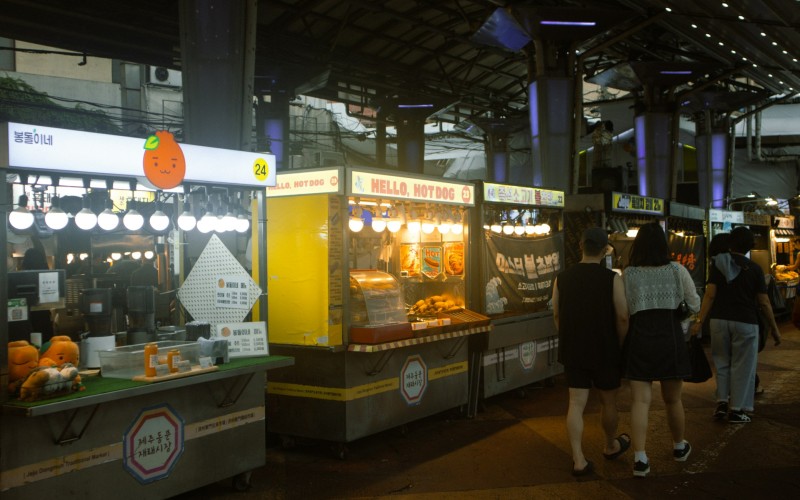
I've visited many traditional markets across Asia, but Dongmun Market in Jeju City has a character of its own, particularly in the evening.
During the day, this long-established market serves the local community. Its stalls sell fresh fish, vegetables, fruit, dried seafood and Jeju's well-known citrus produce. Later in the day, the food-stall area takes on a different character as visitors and residents come to sample freshly prepared dishes.
Open grills, sizzling seafood and the aromas of Korean street food make this a good place to explore the island's culinary traditions. Depending on the stalls operating that evening, you may find grilled lobster, other local seafood specialities and Jeju black pork.
I enjoyed the informal atmosphere and the opportunity to watch the food being prepared before choosing what to try. This is not a fine-dining experience; its appeal lies in the food, the interaction with the vendors and the chance to see a different side of local life.
I'd recommend setting aside an evening to visit Dongmun, particularly for anyone interested in Korean food and traditional markets.
The Haenyeo: Jeju's Women of the Sea
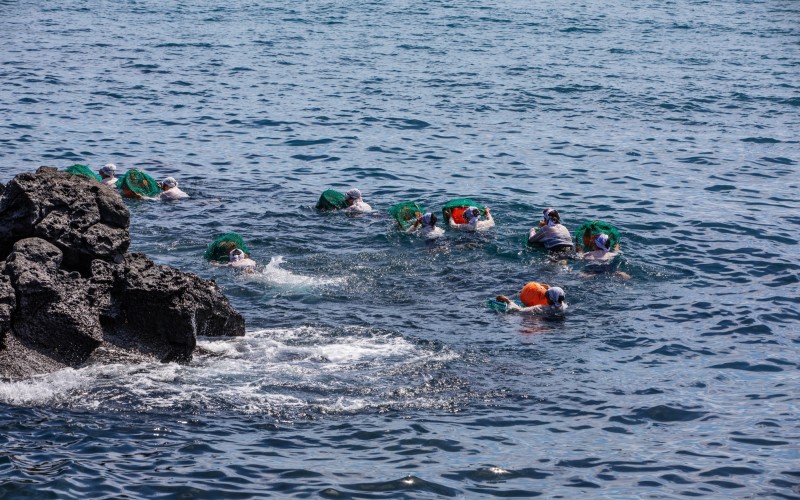
Among the most distinctive aspects of Jeju's cultural heritage are the haenyeo, or women of the sea. For generations, these divers have made their living harvesting seafood from the island's surrounding waters, descending beneath the surface without breathing apparatus to collect abalone, sea urchins, shellfish and other marine produce.
Traditionally, the haenyeo were important family breadwinners. In a society where men generally held the more prominent economic roles, these women developed their own working communities and a culture built around their knowledge of the sea.
Some divers continue working into their seventies and eighties. Their experience allows them to read the tides, understand changing sea conditions and identify the best places to gather seafood. On surfacing, they make a distinctive whistling sound known as sumbisori, produced as they breathe out and recover their breath.
The culture of Jeju's haenyeo was inscribed on UNESCO's Representative List of the Intangible Cultural Heritage of Humanity in 2016, recognising its importance to the island's identity, women's role in the community and traditional fishing practices.
Visitors may have opportunities to watch the divers at work, meet members of their communities or learn about their way of life at the Haenyeo Museum. Such encounters depend on weather, sea conditions and the women's working schedules, which must always take priority.
The haenyeo offer a fascinating perspective on Jeju's history and the relationship between its people and the sea.
Stone Grandfathers and Jeongbang Falls: Exploring Jeju's Coast
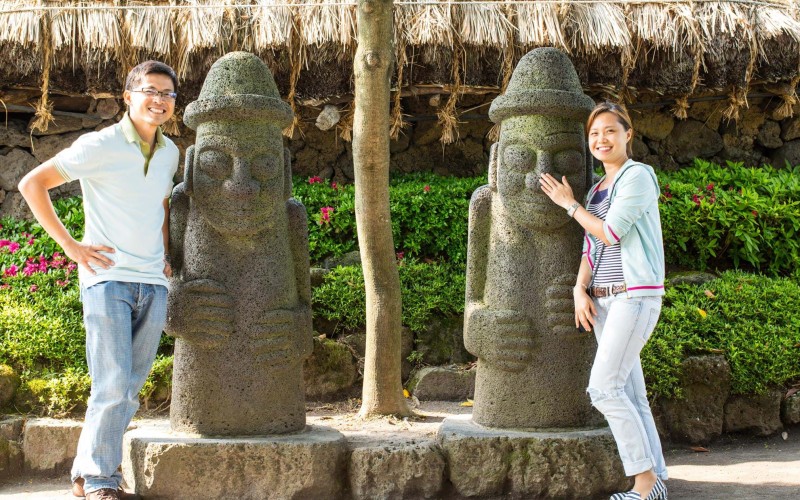
Stone is an integral part of Jeju's landscape and traditional architecture. Formed by volcanic activity, the island's dark, porous basalt has long been used for houses, field boundaries and other everyday structures. Among its best-known examples are the dol hareubang, or stone grandfathers.
These carved figures, usually depicted wearing rounded hats with their hands resting on their stomachs, are among Jeju's most recognisable cultural symbols. Historically, they were placed outside the gates of fortified towns during the Joseon dynasty, where they served as guardians. Today, examples can be found throughout the island, standing outside museums, gardens and public buildings.
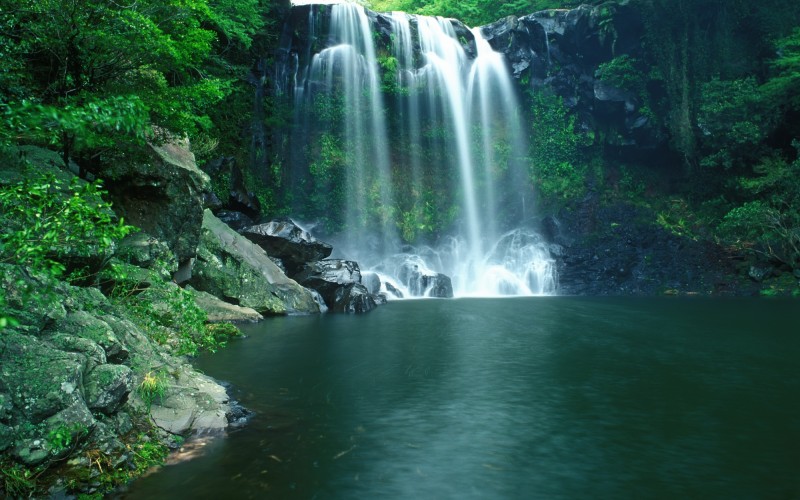
Jeju's coastline offers another perspective on its volcanic landscape. Near Seogwipo, Jeongbang Falls is unusual in that its water descends directly from a coastal cliff into the sea. The waterfall drops approximately 23 metres, with dark rock formations and the surrounding shoreline forming its natural setting.
The falls can be combined with a walk along a section of the Jeju Olle Trail, particularly Route 6, which passes through the Seogwipo area. It is a pleasant way to appreciate the island's coastal scenery while discovering some of its traditional stone heritage.
Seongsan Ilchulbong: Jeju's Volcanic Heritage
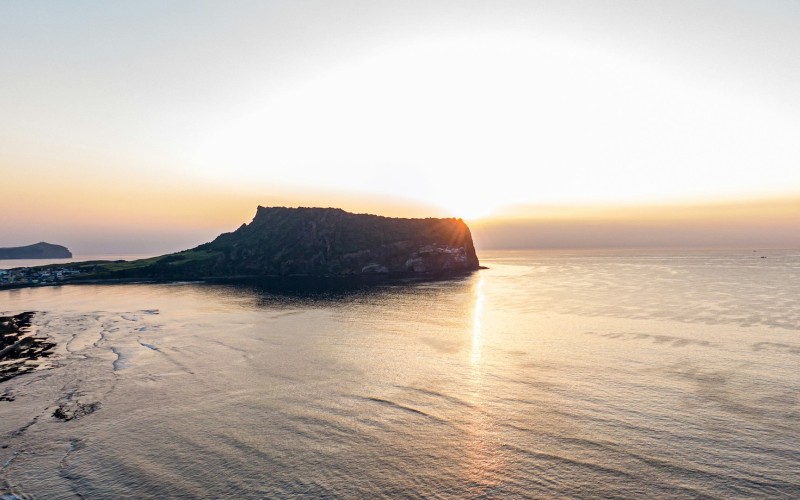
On Jeju's eastern coast, Seongsan Ilchulbong, commonly known as Sunrise Peak, rises above the surrounding sea and farmland. This distinctive volcanic tuff cone was formed by an eruption beneath the sea and stands approximately 182 metres high.
Its broad crater, encircled by a series of rocky peaks, can be reached by a stepped walking path. The climb rewards visitors with views across the crater, coastline and neighbouring villages. Those who prefer not to make the ascent can admire the formation from the surrounding coastal paths.
Seongsan Ilchulbong forms part of the Jeju Volcanic Island and Lava Tubes UNESCO World Heritage Site, alongside Hallasan Mountain and the Geomunoreum lava tube system. The site is recognised for its geological features and the evidence it provides of volcanic activity.
The surrounding coast is also associated with the haenyeo, whose working lives have long been tied to these waters.
Whether explored on foot or viewed from below, Seongsan provides a useful insight into the geological forces that shaped Jeju.
Jeju Black Pork: A Local Culinary Tradition
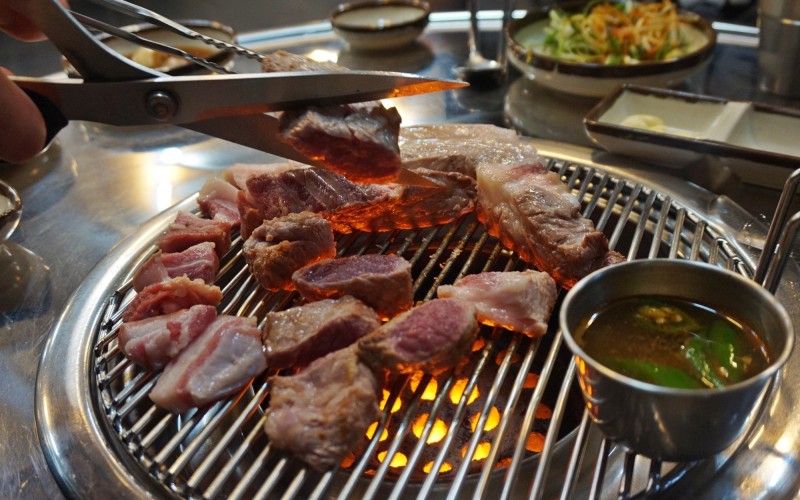
No exploration of Jeju's food would be complete without trying its celebrated black pork. The island has its own native black pig, a relatively small breed traditionally raised in Jeju and known for its distinctive meat and firm texture.
One of the best ways to sample it is at a Korean barbecue restaurant, where thick slices are grilled at the table. The meat is typically accompanied by lettuce and perilla leaves, garlic, spring onions, fermented soybean paste and an assortment of banchan, the small side dishes served with Korean meals.
A particularly local accompaniment is meljeot, a dipping sauce made from fermented anchovies. Its salty, savoury flavour works well with the grilled pork.
The meal is an informal, sociable affair, with everyone assembling their own little parcels of meat and accompaniments. It is also a good opportunity to appreciate the regional variations within Korean cuisine.
Black pork restaurants are found throughout Jeju, including the Black Pork Street in the old part of Jeju City.
Discover Jeju with TransIndus
Jeju has much to offer beyond its best-known natural attractions. Its tea-growing traditions, seafood markets, stone heritage, volcanic landscapes and distinctive cuisine reveal different aspects of island life.
At TransIndus, we enjoy introducing travellers to these less familiar experiences. Our specialists can incorporate selected visits into a tailor-made holiday to South Korea, arranging knowledgeable local guides, private transport and carefully chosen accommodation, with time to explore the island at a comfortable pace.
Related Tours

Essence of South Korea
9 days from £ 5275 per person

South Korea Active Explorer
14 days from £ 7,995 per person

Flavours of South Korea
14 days from £ 7,995 per person