
06.10.2026 Updated: Amrit Singh
After a particularly busy summer, I willingly accepted a warm invitation from Anu and RP Singh to spend a few days with them at their family retreat, Mela Kothi – The Chambal Safari Lodge. It was intended as a little downtime and pampering between meetings in Delhi and Kerala.
What I found instead was one of those wonderful travel experiences that reminds me why, after so many years in the business, India can still surprise me. It had that elusive ingredient we are always searching for at TransIndus: the wow factor.
A lifelong traveller with deep roots in India, Amrit co-founded TransIndus and has been designing luxury journeys across India for over three decades. She has travelled extensively across the country and continues to seek out the less-discovered experiences that make India so rewarding.
Into another India
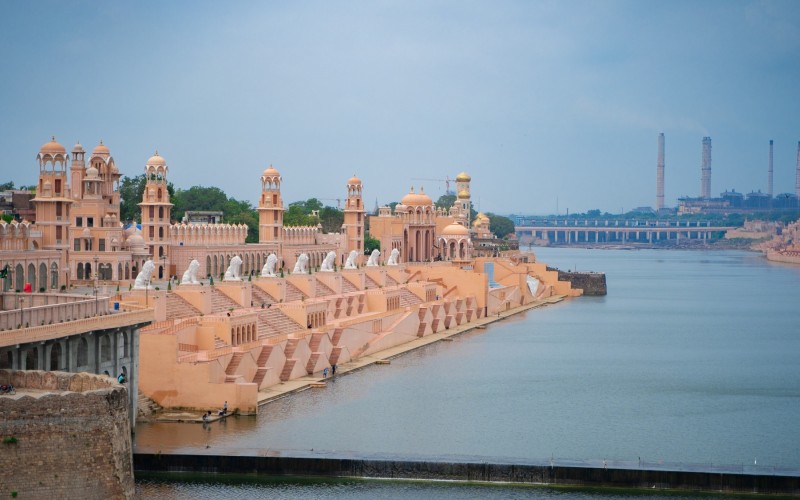
What struck me almost immediately was how quickly India can change character.
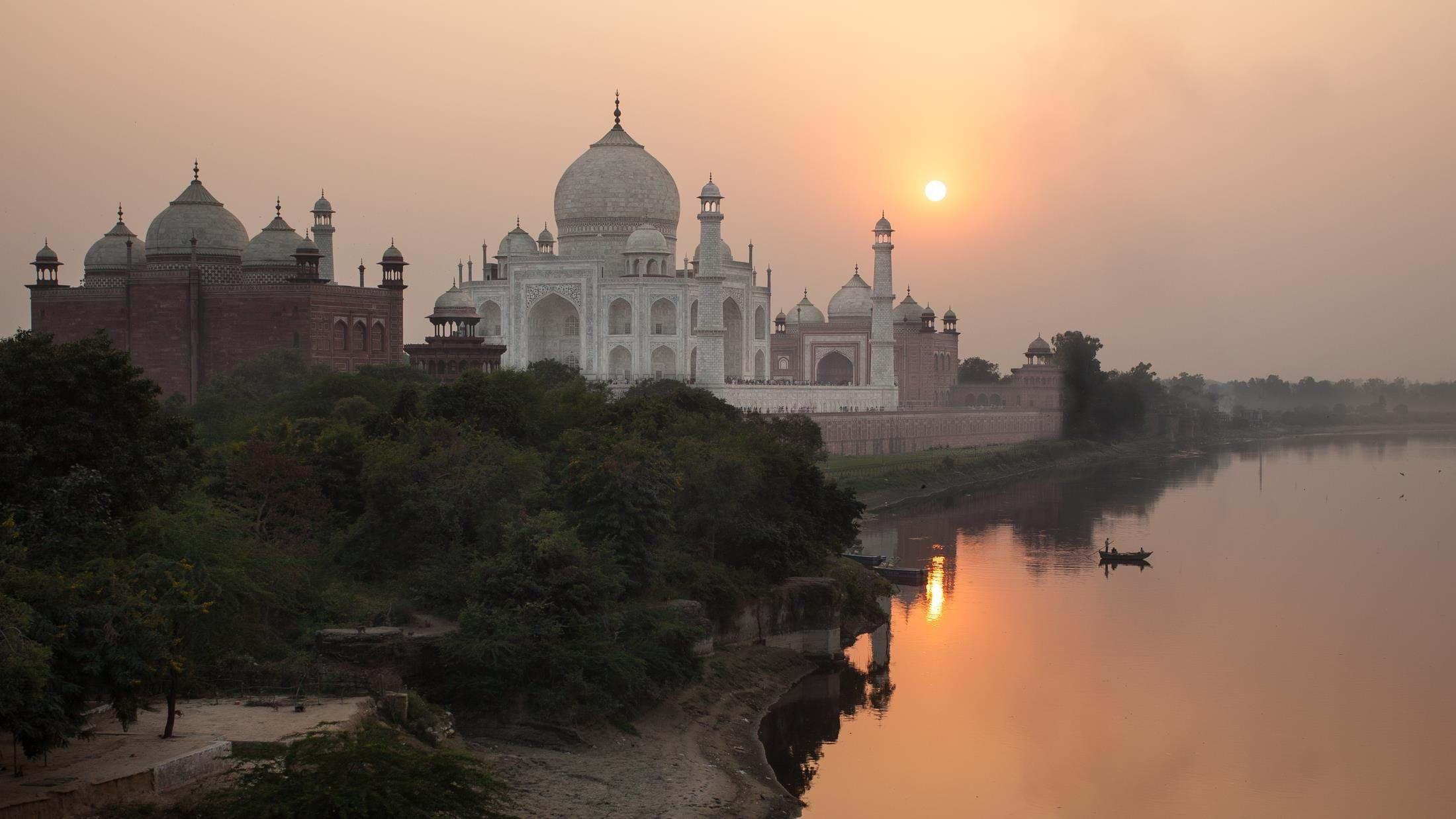
Barely an hour and a half from the crowds and magnificence of the Taj Mahal, I found myself in a completely different world: a landscape of farmland, deep ravines and tiny villages, where fields of sesame and other crops stretch towards ancient temples and two of northern India’s great rivers, the Chambal and Yamuna.
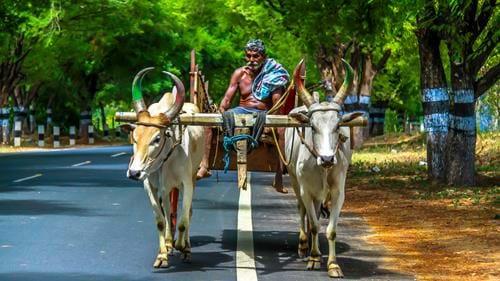
There is something wonderfully calming about the landscape. Life seems to move at a gentler pace here and, after the intensity of Delhi and Agra, I found myself slowing down with it.
For travellers who have already experienced India’s great highlights, this is part of the appeal of Chambal: it offers the chance to look beyond the celebrated sights and discover a landscape that feels distinctly its own.
A family home with a story
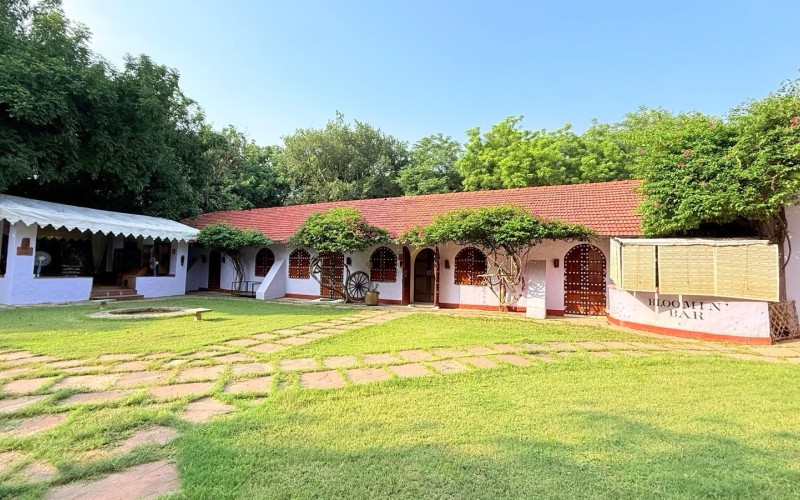
Mela Kothi has a lovely story of its own. The Singh family’s association with this corner of northern India stretches back centuries, and the original kothi was built in the late 1890s by Rai Saheb Chaudhary Suraj Pal Singh, the local zamindar.
Surrounded by woodland and pasture, it became the headquarters for the family’s great twice-yearly cattle mela, which once attracted traders from as far afield as Maharashtra and Odisha (formerly Orissa). Hence the name: Mela Kothi.
By the end of the 20th century, both the fair and the old house had fallen into disrepair. Then, in 1999, Suraj Pal Singh’s great-grandson, conservationist Ram Pratap Singh, and his wife Anu, an environmental scientist, began what became a decade-long labour of love to restore the estate and regenerate its surrounding habitat.
Today, Mela Kothi sits amid some 35 acres of woodland and regenerated habitat. It feels less like a conventional hotel and more like being welcomed into a peaceful country estate. There is arable and dairy farming, the beginnings of an olive orchard and a fledgling natural-sciences institute, all surrounded by the countryside of the Chambal Valley.
And the hospitality is incredibly personal. This is, after all, Anu and RP’s home and life’s work, and that connection with the land gives a stay here a character that would be difficult for a conventional hotel to replicate.
Out on the Chambal River
One of my favourite experiences was taking to the Chambal River by boat.
The National Chambal Sanctuary protects a long stretch of the river and its extraordinary ravine country, spanning three states at around 5,400 km². Drifting quietly along the water, with little more than birdsong and the occasional splash breaking the silence, is perhaps the best way to understand just how wild and unspoilt this part of India remains.
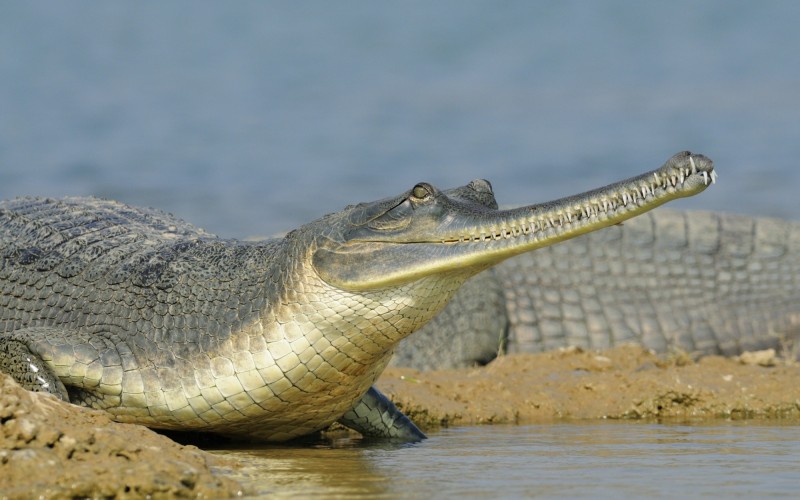
The great wildlife star is the Gharial, that extraordinary and critically endangered crocodilian with its impossibly long, narrow snout. There is something almost prehistoric about seeing one stretched out on an empty sandbank as your boat slips silently past.
It is a very different wildlife experience from the jeep safaris of India’s better-known national parks. Here, there is no sense of rushing from one sighting to another. You simply follow the river and see what reveals itself.
There are mugger crocodiles too, several species of freshwater turtle and, if fortune is on your side, the elusive Gangetic river dolphin.
And then there are the birds.
The Chambal landscape supports an exceptional variety of resident and migratory birdlife. From the boat, its sandbars, riverbanks and wetlands produce a constantly changing cast: Indian skimmers, river terns, great thick-knees, ruddy shelducks, bar-headed geese and kingfishers, among many others.
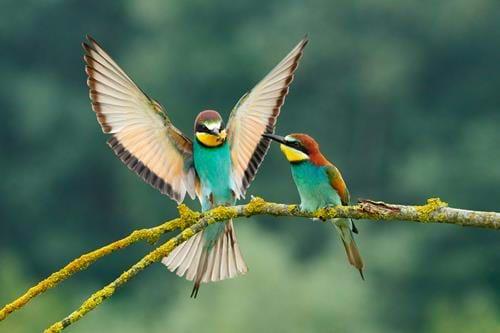
Back at Mela Kothi, the regenerated woodland and surrounding countryside create yet another habitat, with owls, hornbills, bee-eaters and a seemingly endless succession of bird calls accompanying the day.
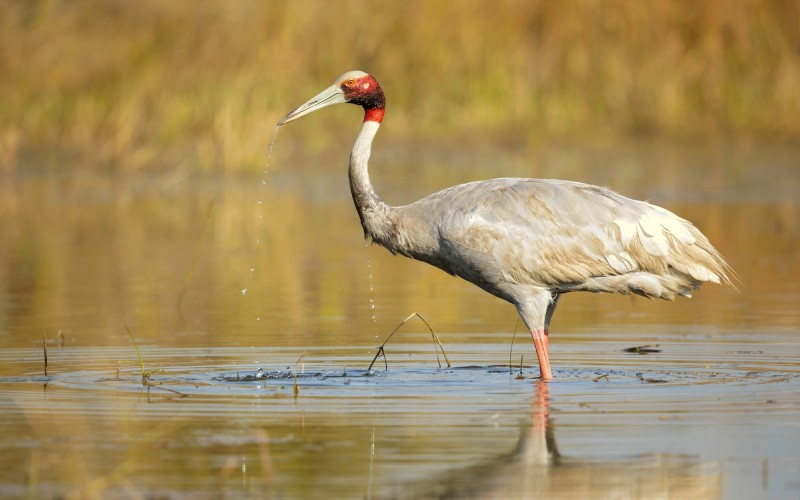
Perhaps the most memorable of all is the Sarus Crane, the world’s tallest flying bird and one of the great symbols of the wetlands and cultivated plains of northern India. They are magnificent creatures – statuesque grey birds with vivid crimson heads, often seen in pairs striding elegantly through the fields.
September can be especially rewarding for seeing these birds, coinciding with the breeding season and offering the possibility of family groups with their young. There is something particularly moving about watching these enormous, graceful birds in an agricultural landscape where wildlife and village life have coexisted for generations.
Boat Rides on the Chambal River
A village with an extraordinary story
Wildlife, however, is only half the Chambal story.
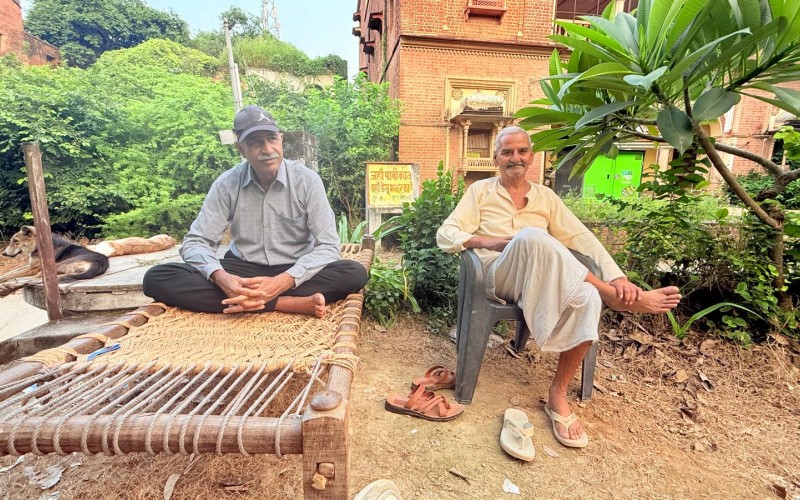
A short drive from Mela Kothi brought me to Holipura, a heritage village on the edge of the Yamuna ravines and a traditional stronghold of the Chaturvedi community. Here, history becomes entwined with legend.
One of the most colourful local traditions links the ancestry of the Chaturvedis with Greek soldiers who came to India with Alexander the Great in the fourth century BC. The story holds that some remained behind after Alexander’s campaign and, over generations, established themselves in India.
Whether such an ancient connection could ever be conclusively established is almost beside the point. The story has become part of Holipura’s inherited identity and adds another intriguing layer to a village already rich in history.
Over subsequent centuries, Chaturvedi families prospered under the patronage of regional rulers and rose to positions of influence. Their success can still be read in the architecture.
Walking through Holipura, I found substantial old havelis lining its lanes – some beautifully preserved, others fading rather romantically with age. Behind their façades are courtyards, balconies and architectural details reflecting different periods of Indian history, with traditional and Mughal influences gradually giving way to touches from the colonial era.
What I particularly liked was that Holipura does not feel like a museum created for visitors. Families such as that of village elder Sanjay Ji still inhabit these houses, and everyday life continues around them. You are walking through a living village, not an exhibit, and that makes the experience all the more engaging.
Temples beside the Yamuna
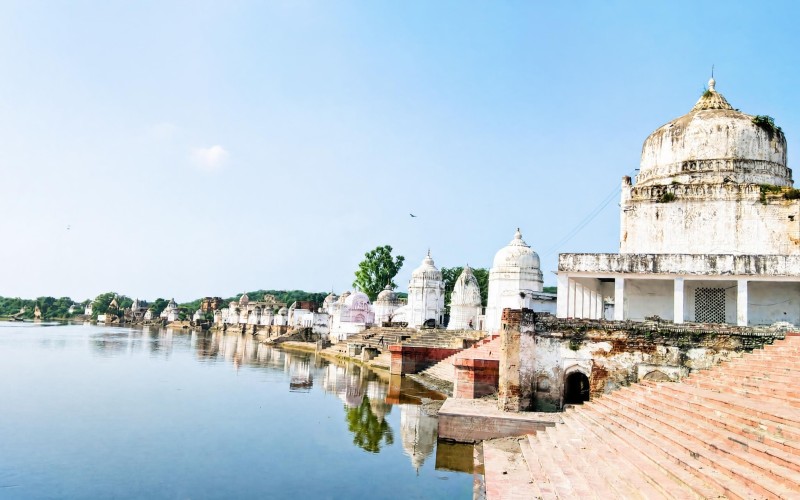
Another revelation was Bateshwar, an ancient pilgrimage settlement gathered around a sweeping bend of the Yamuna.
Here, a remarkable succession of whitewashed temples and shrines lines the riverfront, their spires rising above stone ghats descending towards the water. Mostly dedicated to Shiva, they form one of those quintessentially Indian scenes that seem almost too perfectly composed: temple towers and pilgrims, priests and boats, children and villagers, with everyday life unfolding beside the sacred river.
Locally revered as a kind of mini Kashi, Bateshwar has been an important place of pilgrimage for generations, yet remains remarkably little known to international travellers. It is especially surprising when you consider how close it lies to Agra.
Perhaps that is part of its charm.
The pleasure of travelling a little further
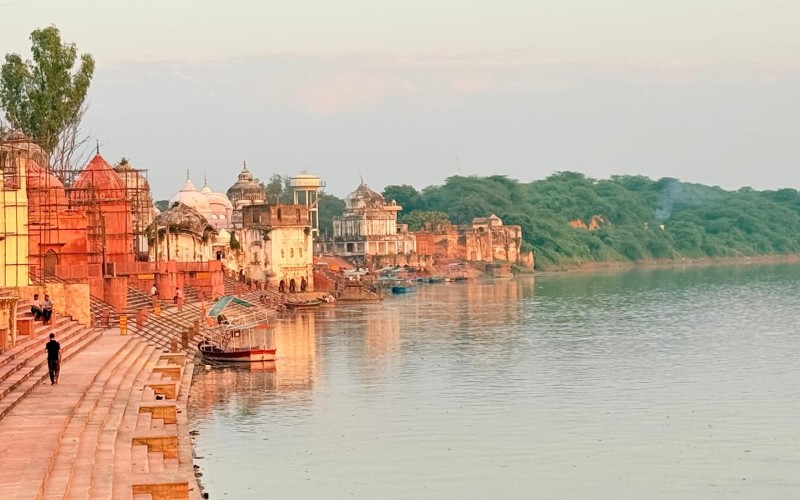
For me, this is what encapsulates the appeal of Chambal.
Most of us travel to this part of India thinking of the Taj Mahal, Agra Fort and the magnificent legacy of the Mughals. And rightly so. But travel just a little further and another India begins to reveal itself.
It is an India of gharials basking on empty sandbanks and Sarus cranes calling across the fields; of boats drifting along a quiet river; of old havelis guarding stories of Greeks and maharajas; and temple spires reflected in the waters of the Yamuna.
At the centre of it all sits Mela Kothi – comfortably and without fuss – providing an ideal base from which to explore.
I had arrived expecting a couple of restful days between meetings. I left wondering why I had not spent more time here before.
Chambal should not, I think, be regarded merely as an excursion to be squeezed into a visit to Agra. Give it two or three days. Slow down. Take the boat out early in the morning, walk through the villages, linger beside the temples, listen for the cranes and allow Anu and RP to introduce you to a landscape they have spent years helping to protect.
For travellers who love wildlife, history and those quieter corners of India where tourism has yet to overwhelm the character of a place, Chambal offers something increasingly precious.
And perhaps that was my greatest discovery: sometimes, you need only travel a little beyond India’s celebrated sights to find the places you remember most.
Related Tours

The Sacred Ganges & Lucknow
16 days from £ 4695 per person

Regal Sanctuaries, Forts and Palaces
15 days from £ 5295 per person